50 Ohm Coaxial Cable Uses and Common Types

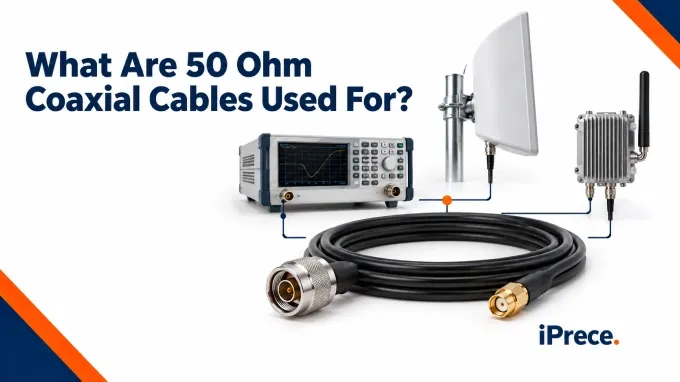
50 ohm coaxial cables are the most commonly used coax cables in the RF and microwave industry. They are used for antenna connections, RF test leads, cellular infrastructure, automotive telematics, and RF interconnects in aerospace, industrial, and medical electronics. They carry high-frequency signals between components designed for a 50 Ω transmission path.
The 50 ohm rating refers to the cable’s characteristic impedance, not its DC resistance. The 50 ohm rating matches the impedance used by many radios, wireless modules, and RF test instruments.
In applications where standard cable lengths, connector combinations, or performance levels are not suitable, custom RF cable assemblies may be used to meet specific system requirements.
1. Antennas, Wi-Fi, Cellular, and GPS
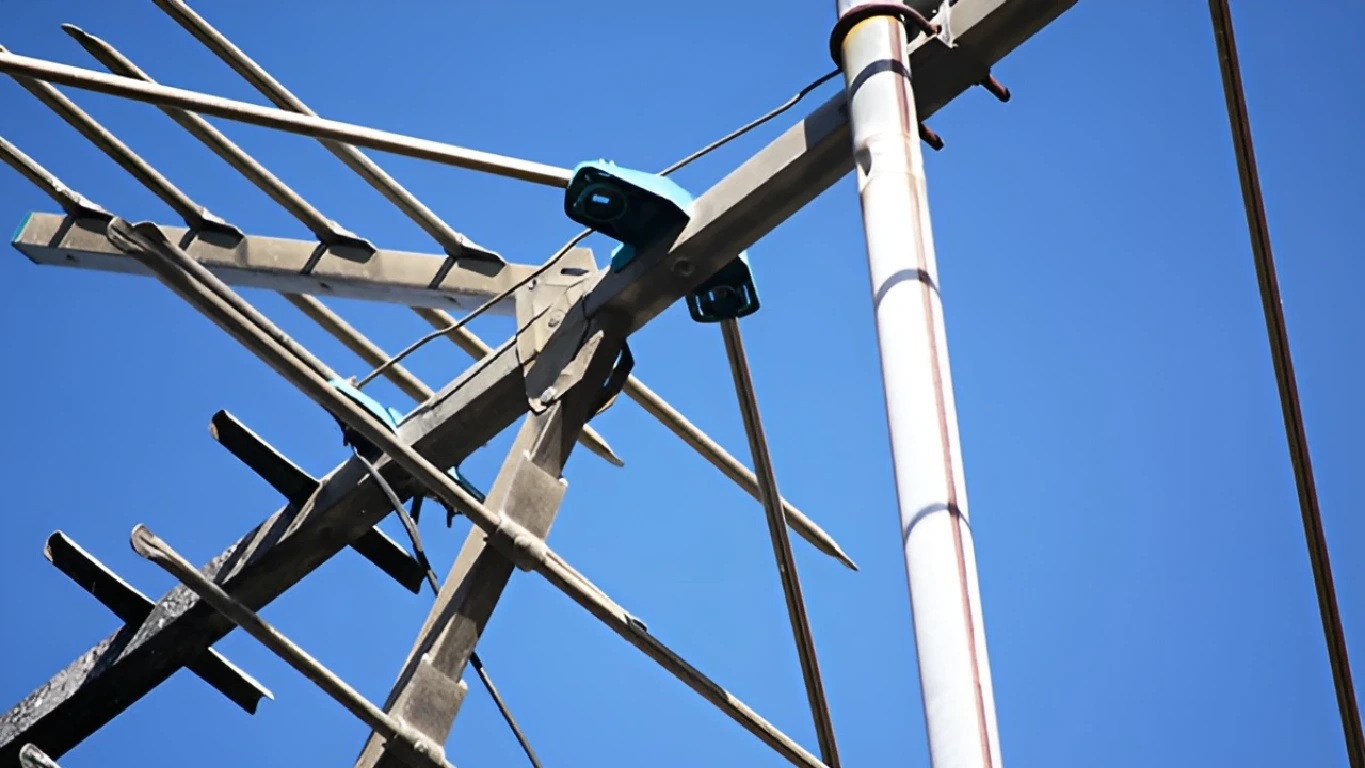
One of the most common uses of 50 ohm coaxial cable is connecting RF modules to antennas. Wi-Fi routers, access points, cellular modems, radios, IoT gateways, and GPS/GNSS receivers all rely on controlled-impedance transmission paths to carry high-frequency signals with minimal reflection and loss.
In these applications, the cable assembly may connect a transmitter, receiver, or transceiver to an external or embedded antenna.
Requirements for these applications: Loss at the operating frequency, available routing space, connector compatibility, and cable length. External connections may also require weather sealing and strain relief.
Important cable characteristics for this application: For short connections inside compact devices, miniature coax, such as RG174, RG316, or micro-coax, helps route the signal through limited space. However, cable loss must still be checked at the operating frequency and required length.
Tradeoffs: Small diameter makes routing easier but generally increases attenuation. Lower-loss cable can preserve more signal power while requiring more space and a larger bend radius. A cable that fits the enclosure may consume too much of the available signal budget. External connections also need suitable strain relief and, where exposed to weather, sealed interfaces.
2. RF Test and Measurement Equipment
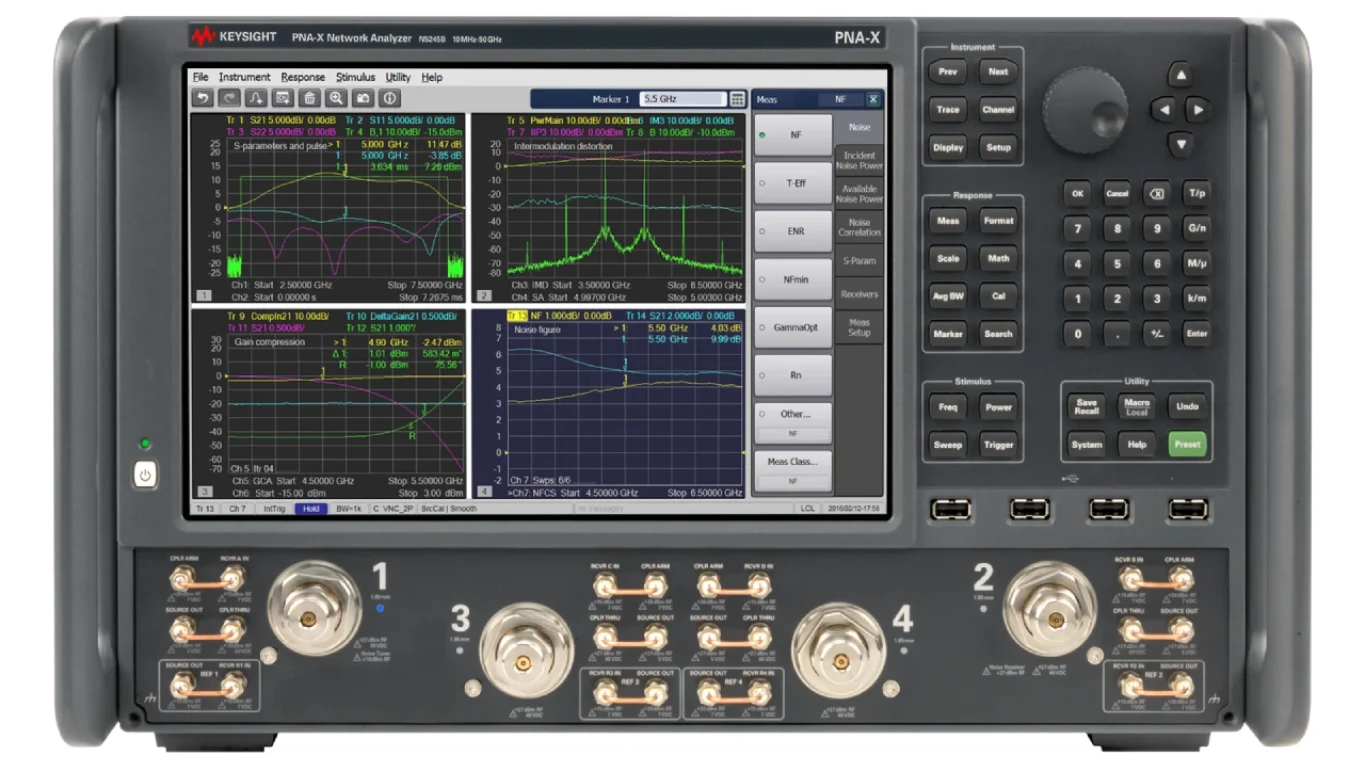
RF laboratories and production test systems commonly use 50 ohm cable assemblies because most RF test instruments are designed around a 50 ohm system impedance. Typical equipment includes vector network analyzers (VNAs), spectrum analyzers, signal generators, power meters, and RF test fixtures.
Requirements for this applications: The requirements depend on how the connection is used:
Fixed test connections: Check frequency range, insertion loss, impedance match, and connector compatibility.
Frequently handled test leads: Evaluate flex life, connector durability, and electrical repeatability.
Precision VNA measurements: Consider phase and amplitude stability during bending and temperature changes.
Important cable characteristics for this application: Flexible test assemblies with documented phase and amplitude stability, durable terminations, and connectors rated for the measurement band. Fixed connections may have less demanding flexibility requirements.
Tradeoffs: Precision test assemblies cost more than routine patch leads. Select stability appropriate to the measurement; low insertion loss alone does not establish measurement repeatability.
3. Telecom, Base Stations, and Distributed Antenna Systems
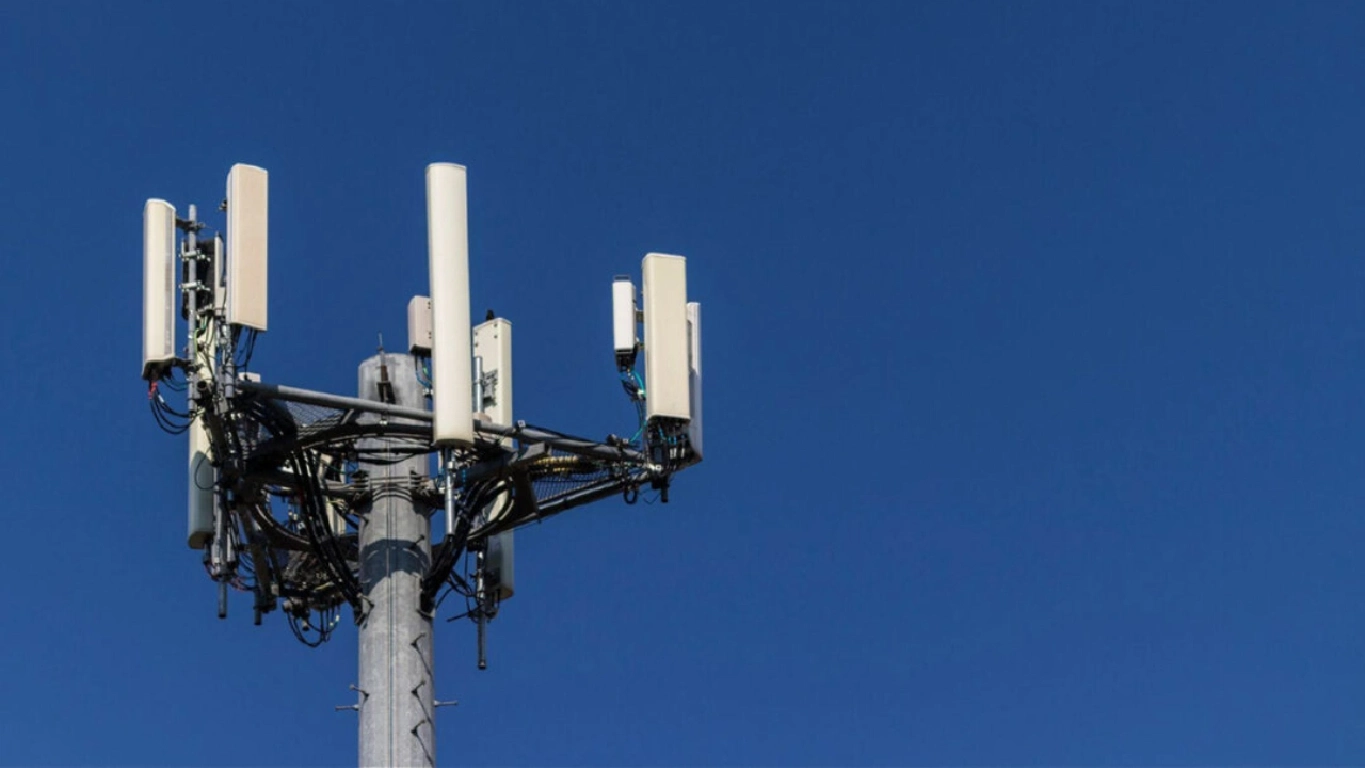
Telecommunications infrastructure is another major area for RF cable assembly applications. 50 ohm coaxial assemblies can be used to route RF signals between radios, antennas, amplifiers, filters, and other components in cellular networks, base stations, and distributed antenna systems (DAS).
Requirements for this applications: Attenuation over the installed length, RF power handling, environmental exposure, and installation space. Multi-carrier transmit paths may also require specified passive intermodulation performance.
Important cable characteristics for this application: Low-loss feeders, suitable power ratings, protective jackets, sealed interfaces, and supported routing. Where PIM matters, specify a low-PIM assembly separately from its attenuation requirement
Tradeoffs: Larger feeders reduce loss but add weight and routing constraints. Low-PIM performance also depends on the connector system and installation quality, rather than cable selection alone.
4. Automotive RF Systems

Modern vehicles contain multiple wireless and RF systems, many of which use 50 ohm transmission lines. Applications include GPS/GNSS navigation, AM/FM radio, LTE and 5G telematics, Wi-Fi, Bluetooth, and communication links between antennas and electronic control modules.
Requirements for this applications: Vibration, temperature, harness routing, connector retention, and correct mating. Environmental protection depends on whether the connection sits inside the cabin, within an enclosure, or in an exposed location.
Important cable characteristics for this application: Automotive-qualified cable assemblies, secure terminations, strain relief, and appropriately coded connectors. FAKRA provides a common 50 Ω interface with keyed housings and locking features.
Tradeoffs: Smaller cables simplify harness packaging but can increase loss over longer routes. Qualification and connector coding constrain substitutions, even when another assembly has the same nominal impedance.
5. Aerospace, Defense, and Radar
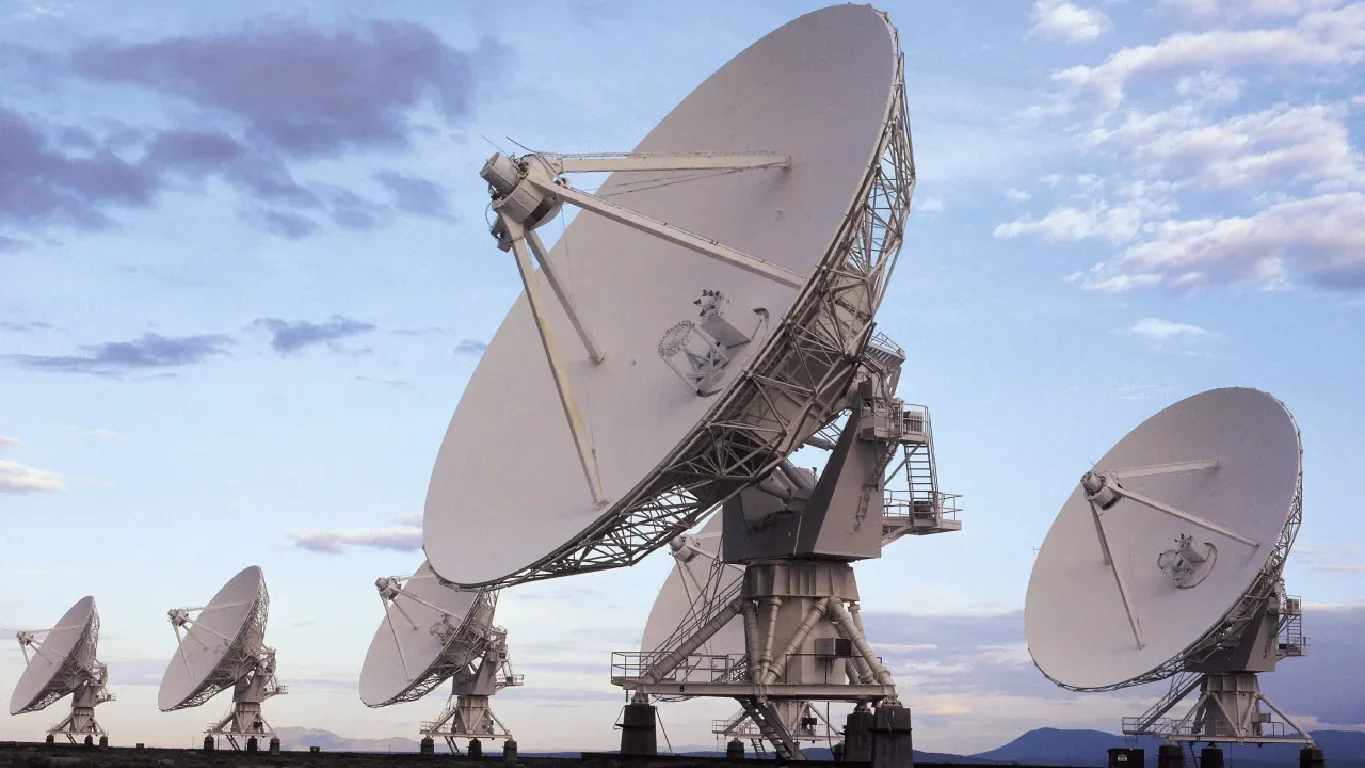
Aerospace and defense systems use 50 ohm coaxial assemblies for radar, RF communications, telemetry, test systems, and other high-frequency electronics. Mission-critical requirements of these industries demand stricter standards for cable assemblies than general commercial systems.
Requirements for this applications: Assemblies may need to maintain consistent electrical performance across wide temperature ranges while resisting vibration, mechanical stress, and harsh environments. Higher-frequency radar and microwave systems may also require specialized low-loss, semi-rigid, conformable, or phase-stable cable assemblies rather than standard general-purpose coax.
Important cable characteristics for this application: Semi-rigid or conformable assemblies for controlled fixed routing; qualified flexible assemblies for serviceable or moving connections; phase-stable constructions with defined performance where phase accuracy matters
Tradeoffs: Semi-rigid cable requires planned forming and routing and does not suit repeated movement. Rugged protection, specialized materials, and tighter electrical tolerances can increase weight, cost, and manufacturing complexity.
6. Industrial, Robotics, IoT, and Medical Equipment
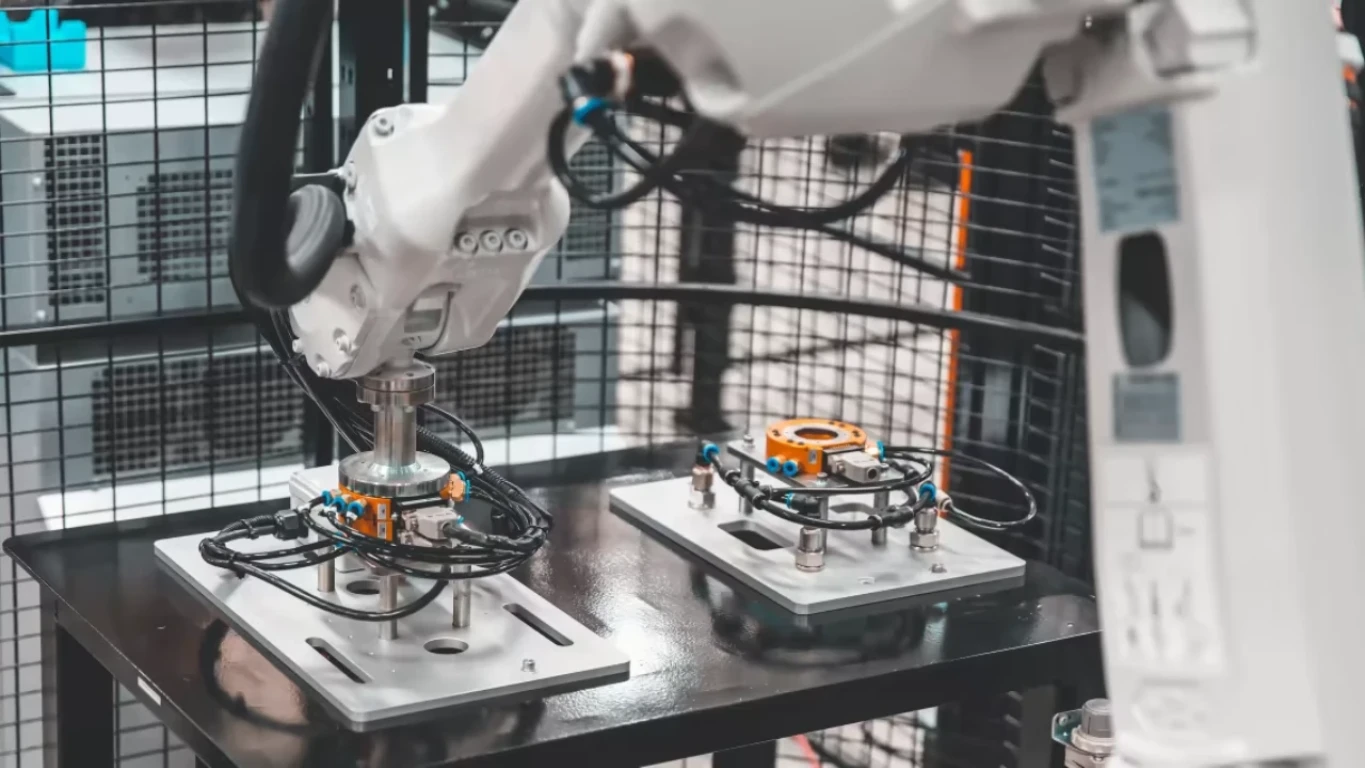
50 ohm coaxial cable is also used in industrial automation, robotics, monitoring systems, IoT devices, and certain medical electronics. These systems often include RF modules, wireless sensors, antennas, or instrumentation that need a shielded transmission path between components.
Requirements for this applications: Compact packaging, shielding around electrically noisy equipment, connector retention, and environmental exposure. Cable paths crossing moving joints also need a defined repeated-flex requirement.
Important cable characteristics for this application: Miniature coax for dense electronics, effective shielding and connector bonding, sealed interfaces where needed, and cable constructions rated for the actual movement. Compact RF assemblies are used in industrial sensors, robotics, and wearable medical devices.
Tradeoffs: Miniature cable limits the available loss budget, while protective jackets and rugged interfaces increase bulk. A cable that bends easily during installation may still be unsuitable for continuous movement.
Why Are 50 Ohm Coaxial Cables The Most Common Type in RF and Microwave Systems?
50 ohm coaxial cables are common in RF and microwave systems because they offer a useful balance between low signal loss, good power handling, and compatibility with widely used RF equipment. The main reasons are:
They balance signal loss and power handling. Lower-impedance coaxial cables can generally handle more power, while higher-impedance designs can reduce signal loss. Around 50 ohms provides a practical middle ground for many RF applications.
Most RF equipment is already designed for 50 ohms. Antennas, transmitters, receivers, test instruments, and many RF connectors commonly use a 50 ohm impedance. This makes it easier to connect components without creating an impedance mismatch.
A matched 50 ohm system reduces signal reflections. If the cable and connected equipment have different impedances, part of the RF signal can reflect back instead of reaching its destination. Using a 50 ohm coaxial cable assembly with 50 ohm equipment helps minimize these reflections.
It works across many RF and microwave applications. The same impedance standard is used in wireless communication, cellular systems, antennas, radar, RF test equipment, and many other high-frequency systems.
Why does impedance matching matter?
Think of impedance matching as keeping the signal path consistent. If a 50 ohm transmitter is connected to a 50 ohm cable and a 50 ohm antenna, the signal can move through the system with fewer unwanted reflections.
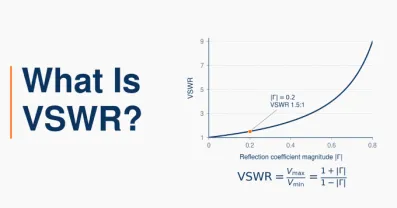
When the impedances do not match, some of the signal is sent back toward the source. Engineers measure this effect using terms such as VSWR and return loss, but the basic idea is simple: a better impedance match means more of the RF signal reaches where it is supposed to go.
This combination of reliable performance and widespread standardization is why 50 ohms has become the most common impedance for many RF cable assembly applications.
50 Ohm vs 75 Ohm Coaxial Cable
50 ohm coaxial cable is common in radio, wireless, antenna, and RF test connections. 75 ohm coaxial cable is common in television, video, and cable broadband systems. Use the impedance specified by the connected equipment.
Mixing 50 ohm and 75 ohm components creates an impedance mismatch that can cause signal reflections and affect performance. Match the cable, connectors, and equipment throughout the connection.
Which Cable Types Are Used in a 50 Ohm RF Cable Assembly?
A 50 ohm RF cable assembly can be made with several types of coaxial cable. The best choice depends on factors such as frequency, cable length, available space, flexibility, temperature, and how much signal loss the application can tolerate.
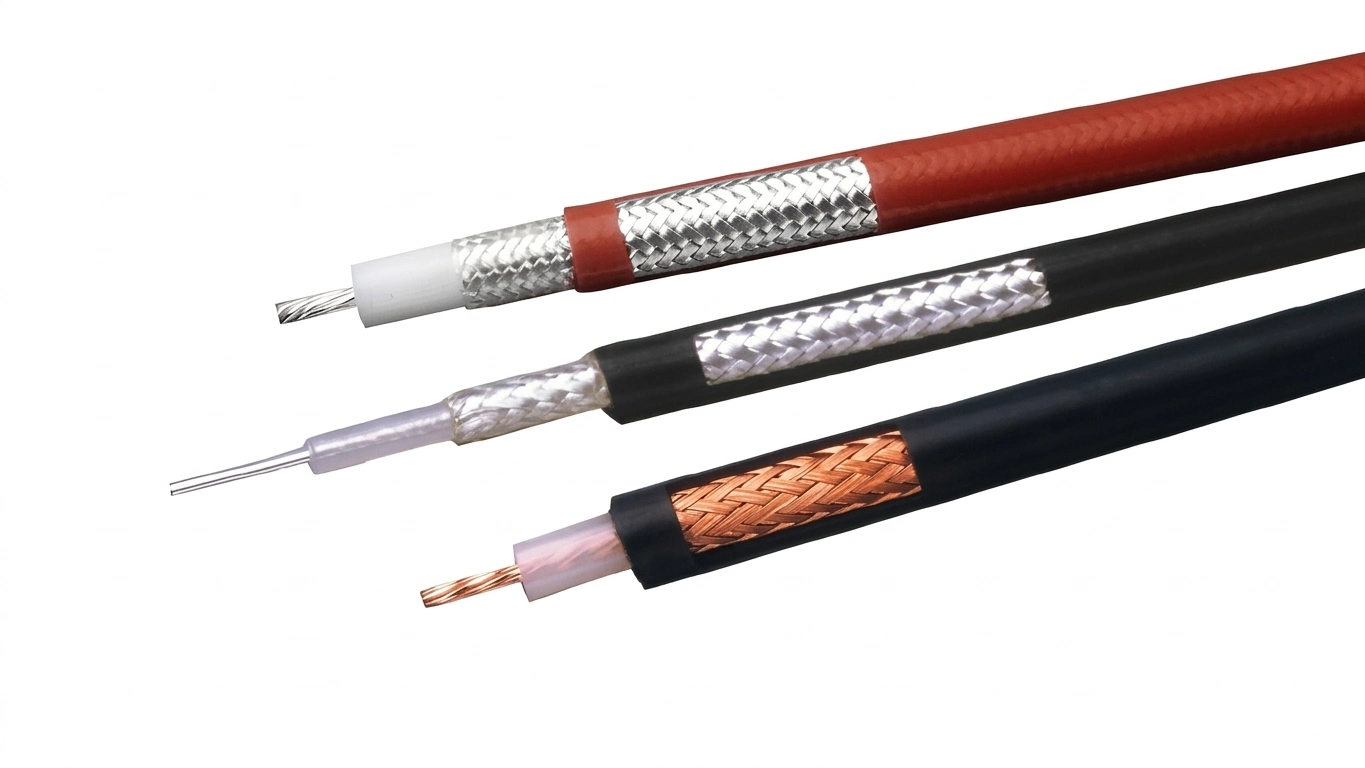
Some of the most commonly used options include:
Cable type | Best suited for | Main advantage | Main tradeoff |
RG58 | General RF connections | Affordable and flexible | Attenuation becomes more significant as frequency and length increase. |
RG174 | Compact devices and GPS | Small diameter | Compact size comes with higher attenuation than many larger cables. |
RG316 | Compact, higher-temperature applications | Small size with PTFE insulation | Temperature-resistant materials do not remove the loss limitations of a small cable. |
RG400 | Harsh or demanding environments | Better shielding and temperature resistance | Material and shielding benefits can add cost; attenuation still needs checking. |
Low-loss coax | Longer cable runs | Lower attenuation | Larger diameter, greater weight, and more routing space. |
Micro-coax | Very compact electronics | Extremely small size | Small size can limit usable length through higher attenuation. |
Semi-rigid/conformable coax | Microwave and controlled RF routing | Stable high-frequency performance | Suits shaped routing; suitability for repeated movement must be checked separately. |
RG58 for General-Purpose RF Connections
RG58 is one of the most familiar 50 ohm coaxial cable types. It is flexible, relatively inexpensive, and widely available, making it suitable for general-purpose RF connections.
Typical uses include:
Radio equipment
Short antenna cables and jumpers
RF test setups
Communication equipment
Short connections between RF components
RG58 works well when the cable run is relatively short and extremely low signal loss is not required. However, its attenuation, or the amount of signal lost as it travels through the cable, becomes more important as frequency and cable length increase.
For this reason, RG58 may be suitable for a short radio connection but less suitable for a long run carrying a higher-frequency signal.
RG174 and RG316 for Compact Cable Assemblies
RG174 and RG316 are much smaller than RG58, making them useful when there is limited space inside a device.
Common applications include:
GPS and GNSS devices
Embedded wireless modules
Small antennas
Internal RF connections
Compact communication equipment
Their small diameter makes them easy to route through tight spaces and around components. The tradeoff is that smaller coaxial cables generally have higher signal loss than larger cables, especially at higher frequencies or over longer distances.
RG400 for More Demanding Environments
RG400 is another 50 ohm coaxial cable commonly used when an application requires greater durability or environmental resistance. Compared with basic general-purpose cables, RG400 typically provides strong shielding, good temperature resistance, PTFE insulation, better suitability for demanding environments, and reliable RF performance.
Typical uses include:
Aerospace
Defense
Industrial equipment
Test systems
Applications where the cable may experience heat, vibration, or electromagnetic interference
The tradeoff is cost and size. RG400 is generally more expensive than cables such as RG58, so its additional performance is most useful when the application actually requires it.
Low-Loss 50 ohm Coaxial Cable for Longer RF Runs
As an RF signal travels through a 50 ohm coaxial cable, some of its energy is lost along the way. This is called attenuation. In simple terms, the longer the cable and the higher the operating frequency, the more signal loss you can expect.
When that loss becomes significant, a low-loss 50 ohm coaxial cable may be a better choice than smaller cables such as RG58 or RG174. For engineers comparing similar low-loss options, CNT-400 vs LMR-400 is a useful starting point for evaluating attenuation, flexibility, and installation requirements.
Low-loss cable is commonly considered for:
Longer antenna runs
Cellular installations
Base stations
Distributed antenna systems
Outdoor wireless equipment
Higher-frequency RF connections
These cables usually reduce signal loss by using a larger diameter and a construction designed for better RF performance. The tradeoff is size: larger low-loss cables take up more space, weigh more, and usually need a wider bend radius.
For this reason, they are a good fit when signal performance matters more than compact size or flexibility.
Micro-Coax, Semi-Rigid, and Conformable Cable
Some 50 ohm RF systems need a more specialized cable design because of limited space, higher frequencies, or stricter performance requirements.
Common options include:
50 ohm micro-coax: Micro-coax is designed for very compact devices where standard coaxial cables are too large. It is often used inside wireless products, RF modules, antennas, and other tightly packed electronics. Its small size makes routing easier, although signal loss can be higher than with larger cables.
50 ohm semi-rigid coaxial cable: Semi-rigid cable uses a solid metal outer conductor, so it can be bent into shape and then stay in position. This construction provides strong shielding and stable RF performance, which makes it useful in microwave systems, test equipment, radar, and other high-frequency applications.
50 ohm conformable coax: Conformable cable offers many of the RF performance benefits of semi-rigid cable but is easier to bend and install by hand. It is useful when a system needs controlled RF routing but a traditional semi-rigid cable would be too difficult to shape during installation.
How Do You Choose Between These 50 ohm Cable Types?
There is no single 50 ohm cable that is best for every application, which is why custom RF cable assemblies are often specified when standard cable types, lengths, or connector combinations cannot meet the required electrical or mechanical performance. A practical way to narrow down the options is to consider:
Frequency: Higher frequencies usually make cable loss and connector performance more important.
Length: Longer runs often benefit from lower-loss cable.
Propagation delay: The coaxial cable velocity factor determines how quickly a signal travels through the cable and matters in phase- or timing-sensitive systems.
Available space: RG174, RG316, and micro-coax are useful in compact devices.
Flexibility: Flexible cable is better for moving or frequently serviced connections.
Temperature: Materials such as PTFE may be necessary in high-temperature environments.
Shielding: Better shielding may be needed around strong sources of EMI or RFI.
Bend radius: Larger low-loss cables require more room to route safely.
Environment: Vibration, moisture, temperature changes, and mechanical stress can influence cable selection.
FAQ
Discussion (0)
Be the first to comment.