


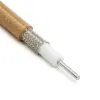


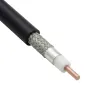
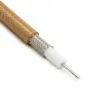
RF Cable Applications
The core industries and mission-critical applications for RF coaxial cables include the following.
Telecommunications and Wireless Infrastructure
Base stations, cellular antenna feeders, and Distributed Antenna Systems (DAS) require low attenuation over extended runs alongside UV and weather resistance.
RF and Microwave Test and Measurement
Calibration benches, VNA setups, and automated test equipment (ATE) depend on mechanical phase stability, low VSWR, and repeatable insertion loss when test leads are repeatedly flexed.
Radar, Aerospace, and Satellite RF Cable
Airborne, shipboard, and ground-based phased-array radars require tight phase tracking across extreme temperature swings and high electromagnetic isolation.
Military and Electronic Countermeasure (ECM) Systems
Defense electronics and EW/ECM platforms operate under severe thermal, vibrational, and high-power conditions where signal leakage or phase drift directly degrades mission accuracy.
High-Frequency and Millimeter-Wave Communications
High-capacity backhaul links, satcom, and 5G/6G millimeter-wave signal chains require ultra-tight outer diameters to suppress higher-order modes while keeping attenuation minimal.
RF Modules and Equipment Interconnections
Internal module wiring, rack-to-rack jumpers, and compact enclosure layouts require controlled minimum bend radii or hand-formable, fixed-routing semi-rigid profiles.
RF Cable types
Explore our 10 coaxial RF cable families to match your electrical, mechanical, and environmental requirements.
Series | Characteristic | Impedance | Max Frequency | Application |
ARX | Phase-Stable, High-Power | 50 Ω | Up to 67 GHz | Radar arrays, EW |
FPX | Flexible, Stranded Core | 50 Ω | Up to 50 GHz | Dynamic routing |
HPX | Composite Shielding | 50 Ω | Up to 35.4 GHz | Aerospace, avionics |
LFX | Microporous PTFE | 50 Ω | Up to 60 GHz | Flexible high-freq |
LMR | Braided, Env. Jackets | 50 / 75 Ω | Up to 8 GHz | Wireless feeders |
MMX | Ultra-Compact mmWave | 50 Ω | Up to 105 GHz | mmWave test |
RG | General-Purpose MIL | 50 / 75 Ω | Up to 40 GHz | Legacy telecom |
SRX | Semi-Rigid Solid Tube | 50 Ω | Up to 60 GHz | High-isolation |
ULX | Ultra-Low-Loss | 50 Ω | Up to 83 GHz | Array feeds |
VNX | Ruggedized for Test | 50 Ω | Up to 67 GHz | VNA calibration |
ARX Series
Primary Differentiator: Thermally phase-stable construction (950 PPM phase stability across −50 °C to +85 °C) combined with high peak power handling up to 10 kW.
Key Specs: 50 Ω | DC to 67 GHz max operating frequency | Greater than 90 dB shielding
Typical Applications:
Military radar arrays and high-power transmitters
Electronic countermeasures (ECM) and EW platforms
Phase-critical RF transmission systems
FPX Series
Primary Differentiator: Highly flexible stranded center conductor with a tight 14 mm minimum bend radius, engineered for dynamic routing and phase stability (within 950 PPM).
Key Specs: 50 Ω | DC to 40 GHz max operating frequency | Greater than 90 dB shielding
Typical Applications:
Coaxial RF cable assemblies subject to frequent movement or flexure
Compact system enclosures with constrained routing paths
Phase-sensitive interconnections up to 50 GHz
HPX Series
Primary Differentiator: Triple-layer composite shielding (greater than 100 dB isolation) and superior phase stability under bending for harsh aerospace and defense environments.
Key Specs: 50 Ω | DC to 35.4 GHz max operating frequency | 2.5 to 10 kW peak power rating
Typical Applications:
Military, avionics, and aerospace electronics
High-power radar and secure communications systems
High-isolation RF test environments
LFX Series
Primary Differentiator: Low-density microporous PTFE dielectric and silver-plated copper conductors engineered to minimize insertion loss in flexible microwave links.
Key Specs: 50 Ω | DC to 26.5 GHz max operating frequency | Up to 8 kW peak power
Typical Applications:
Low-loss, high-frequency flexible RF interconnections
Signal chains requiring minimal attenuation and greater than 90 dB shielding
Microwave subsystem links operating up to 60 GHz
LMR Series
Primary Differentiator: Flexible, low-loss braided coaxial cables for wireless feeders and building distribution, available with UV-resistant PE, Flame Retardant (FR), Direct Burial (DB), and Plenum jackets.
Key Specs of LMR cable: 50 Ω and 75 Ω | DC to 8 GHz max operating frequency | Greater than 90 dB shielding
Typical Applications:
Wireless base station and antenna feeder runs
General RF signal routing and in-building wireless distribution
Outdoor, rooftop, and conduit installations requiring specialized environmental jackets
MMX Series
Primary Differentiator: Ultra-compact 1.60 to 4.00 mm outer diameter profiles engineered for mode-free, phase- and amplitude-stable millimeter-wave transmission.
Key Specs: 50 Ω | DC to 40 GHz max operating frequency (model-dependent) | Greater than 90 dB shielding
Typical Applications:
Millimeter-wave (mmWave) semiconductor and wafer probing
Precision mmWave instrumentation and transceiver subsystems
High-frequency R&D and production test benches up to 105 GHz
RG Series
Primary Differentiator: Industry-standard flexible and semi-rigid general-purpose coax cables manufactured across diverse dielectric, conductor, and jacket configurations.
Key Specs of RG cable: 50 Ω and 75 Ω | DC to 40 GHz (model-dependent) | Up to 110 dB shielding (model-dependent)
Typical Applications:
General-purpose RF interconnections and industrial RF cable routing
Commercial telecom, industrial electronics, and test fixtures
Legacy system maintenance, MIL-spec equivalents, and standard BOM replacements
SRX Series
Primary Differentiator: Solid bare copper tube outer conductor delivering greater than 165 dB shielding effectiveness for fixed, precision point-to-point RF routing.
Key Specs: 50 Ω | DC to 50 GHz max operating frequency | Greater than 165 dB shielding
Typical Applications:
Precision internal RF and microwave module routing
High-isolation receiver/transmitter chains and cryogenics
Fixed point-to-point assemblies where crosstalk must be completely eliminated
ULX Series
Primary Differentiator: Ultra-low-loss construction featuring up to 83% velocity of propagation (VoP) and less than 500 PPM thermal phase variation for attenuation-critical paths.
Key Specs: 50 Ω | DC to 67 GHz max operating frequency | Greater than 90 dB shielding
Typical Applications:
Attenuation-sensitive microwave and millimeter-wave signal paths
Phase-matched antenna array feeds and precision instrumentation
Wide-temperature RF links operating from −55 °C to +165 °C
VNX Series
Primary Differentiator: Crush-resistant, mechanically phase-stable construction with helical silver-plated copper tape shielding for repeatable Vector Network Analyzer (VNA) measurements.
Key Specs: 50 Ω | Up to 67 GHz cut-off frequency | −55 °C to +165 °C operating temperature
Typical Applications:
Vector Network Analyzer (VNA) calibration and measurement benches
Precision S-parameter characterization and device-under-test (DUT) interfacing
Phase-stable laboratory and production test setups
RF Cable Specifications & Selection Guide
Selecting an optimal industrial RF cable requires balancing the complete electrical, mechanical, and environmental specifications against your system architecture. Relying on a single metric—such as choosing the highest frequency rating—often leads to excessive attenuation, mechanical routing failure, or unnecessary BOM cost. Review the key coaxial RF cable specifications below to match the right transmission line to your project.
1- Operating Frequency vs. Cut-Off Frequency
Ensure the cable's continuous operating frequency covers your highest signal harmonic without exciting higher-order modes. Note whether a datasheet specifies maximum operating frequency or theoretical cut-off frequency, and remember that larger cable diameters generally have lower upper frequency limits.
2- RF Cable Impedance
Match the cable impedance to your system standard. Most RF, microwave, test, and radar systems require 50 Ω transmission lines (available across all 11 iPrece series), whereas specific video, broadcast, and telecom feeder links require 75 Ω configurations (available in select LMR and RG models).
50 Ohm RF Cable
The 50 ohm RF cable is the universal standard for microwave transmission, radar systems, wireless infrastructure, and precision test equipment. It provides the mathematically optimal balance between high peak power handling and low signal attenuation. All 10 iPrece series are manufactured in 50 Ω configurations to support high-frequency and high-power applications.
75 Ohm RF Cable
A 75 ohm RF cable is engineered specifically to minimize signal attenuation in low-power communication links. These cables are the standard choice for video broadcast, CATV, and specific telecommunications and data distribution networks. iPrece offers high-performance 75 Ω options within select LMR and RG series models.
3- RF Cable Attenuation and Insertion Loss
Signal loss increases with frequency and cable length. For attenuation-sensitive links, evaluate microporous PTFE series such as ULX (up to 83% velocity of propagation) or LFX, or choose a larger diameter variant within the LMR family for lower-frequency feeder runs up to 8 GHz.
4- Shielding Effectiveness
High-density racks, receivers, and ECM platforms require high isolation to prevent crosstalk and EMI ingress. While standard braided or tape-braid cables provide > 90 dB isolation, the HPX Series offers > 100 dB via triple-layer composite shielding, and the semi-rigid SRX Series achieves > 165 dB using a solid copper tube outer conductor.
5- RF Cable Phase Stability (Thermal and Mechanical)
Phased-array radars and VNA test benches require stable electrical length. Look for documented thermal phase stability on temperature-exposed links—such as ULX (< 500 PPM) or ARX (950 PPM over −50 °C to +85 °C)—and mechanical phase stability under flexure for test and movable links (VNX, FPX, and HPX).
6- Flexibility and Bend Radius
Fixed internal module connections benefit from formable semi-rigid SRX coax cable. Conversely, tight enclosure routing or dynamic interconnects require flexible stranded or helical builds such as the FPX Series (14 mm minimum bend radius).
7- Coaxial Cable Diameter and Routing Space
Outer diameters across the iPrece catalog span from 1.50 mm (ARX) and 1.60 mm (MMX) up to 30.48 mm (LMR). Verify that your selected cable clears bulkhead feedthroughs, conduit dimensions, and minimum bend clearances.
8- Temperature and Environmental Requirements
Check both high and low thermal extremes. Series such as ARX, HPX, ULX, and VNX support operating temperatures from −55 °C to +165 °C (with select RG types and HPX thermal limits reaching +200 °C; verify continuous vs. peak ratings). For outdoor or building runs, select LMR variants with UV resistance, Direct Burial (DB), Flame Retardant (FR), or Plenum jackets.
9- Power Handling
High-power transmitters require cables rated for both peak pulse power and average CW thermal dissipation. The ARX, FPX, and HPX series include models supporting up to 10 kW peak power, while the LFX Series supports up to 8 kW peak power.
10- Connector Compatibility and Termination
A transmission line's upper operating frequency, VSWR, and phase stability are bounded by both the coaxial cable and its terminated RF connectors. Determine early whether your project requires bulk coaxial cable or complete Custom RF cable assemblies terminated with specific connector interfaces and custom lengths.
Quality Assurance & VNA Testing
Operating under an ISO 9001 quality management system, iPrece subjects its coaxial RF cables and custom assemblies to rigorous electrical and mechanical inspections prior to shipment. We utilize advanced Vector Network Analyzer (VNA) testing to verify critical performance metrics—such as VSWR (Return Loss), Insertion Loss, and phase stability—across the specified frequency bands.
This comprehensive quality control protocol minimizes operational risks for procurement teams and ensures that RF engineers receive the verified, repeatable transmission line performance required for mission-critical system integration.
Order-to-Delivery Process
iPrece streamlines coaxial RF cable procurement for both engineering prototypes and production volume runs through a structured six-step workflow.
Requirement — BOM or RFQ Submission
Engineering Review — Technical Specification and Configuration Verification
Proforma Invoice — Formal Pricing and Lead Time Issued
Payment — Order Confirmation and Payment Processing
Production — Manufacturing to Approved Specifications
Global Delivery — Inspection, Secure Packaging, and Shipment