Which Coaxial Cable Has The Least Amount of Signal Loss?

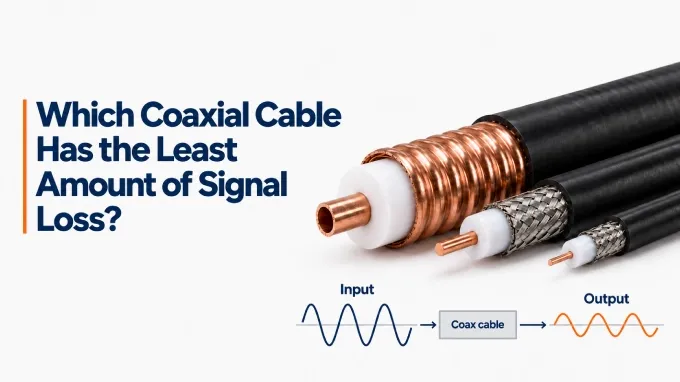
Hardline coax cables typically provide the least amount of signal loss, while LMR-900, LMR-600, and LMR-400 offer progressively higher signal loss in exchange for greater flexibility and easier installation. How cables fit with the system as a whole will determine the overall efficiency of the system, which often justifies investing in custom RF cable assemblies. Let’s take a look at these coax cables in more detail. The approximate signal loss values below are typical for a 100-foot cable run at about 1 GHz.
Hardline Coaxial Cable
Typical signal loss: 1.0–1.3 dB per 100 ft at 1 GHz (model dependant)
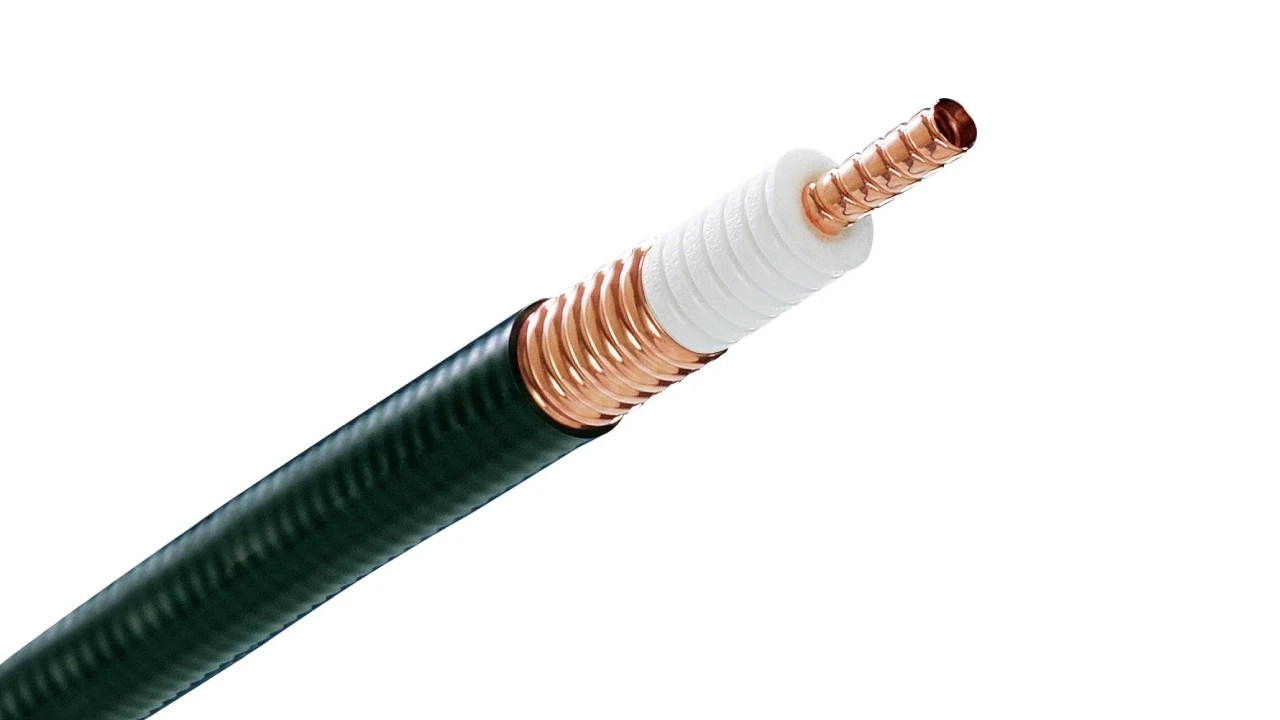
When signal loss is the only consideration, setting aside cost, flexibility, installation constraints, and application requirements, hardline coax provides the lowest signal loss of these options and is commonly used for long, fixed RF transmission runs where maximum signal preservation matters. Although, the typical attenuation depends on the cable diameter and design. The tradeoff is that hardline is thick, relatively rigid, expensive, and more difficult to install.
1. LMR-1200
Typical signal loss: 1.27 dB per 100 ft at 1 GHz
LMR-1200 provides the least amount of signal loss among the LMR cables listed, making it suitable for long antenna-feeder and fixed RF transmission runs. Its large diameter reduces conductor loss, but also makes the cable heavier, less flexible, and more difficult to route than LMR-900, LMR-600, or LMR-400.
2. LMR-900
Typical signal loss: 1.70 dB per 100 ft at 1 GHz
LMR-900 is a very low-loss flexible coaxial cable and a strong choice when low signal loss is a priority, but hardline is impractical. Its large diameter helps reduce conductor loss, although it is considerably bulkier and less convenient to route than smaller LMR cables.
3. LMR-600
Typical signal loss: 2.5 dB per 100 ft at 1 GHz
LMR-600 offers lower signal loss than LMR-400 while remaining more manageable than LMR-900. This balance of attenuation, size, and installation practicality makes it suitable for longer RF cable runs where LMR-400 would introduce too much loss.
4. iPrece’s ULX Series
Typical signal loss: 3.0–19.2 dB per 100 ft at 1 GHz, depending on model
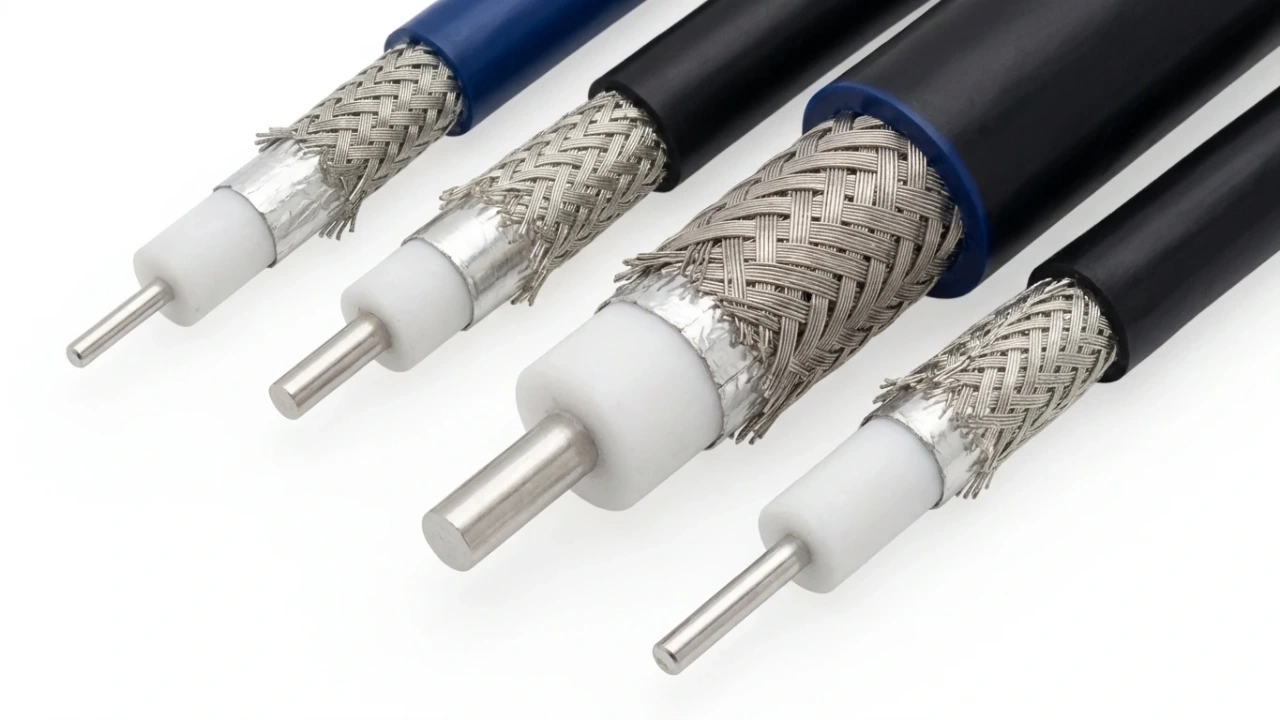
The ULX Series (Ultra Low Loss Coaxial Cable) covers cable diameters from 2.20 to 12.00 mm, so signal loss varies considerably across the range. The larger ULX-1200P provides the lowest loss at approximately 3.0 dB per 100 ft, while smaller models trade higher attenuation for easier routing and operation at frequencies up to 83 GHz.
5. LMR-400
Typical signal loss: 3.9 dB per 100 ft at 1 GHz
LMR-400 has higher signal loss than LMR-600 and LMR-900, but its smaller size makes it easier to route and install. It can be a practical choice for shorter runs where the additional signal loss is small enough that moving to a much larger cable provides little practical benefit. For a closer look at comparable low-loss options, see CNT-400 vs LMR-400.
6. iPrece’s LFX Series
Typical signal loss: 4.5–18.5 dB per 100 ft at 1 GHz, depending on model
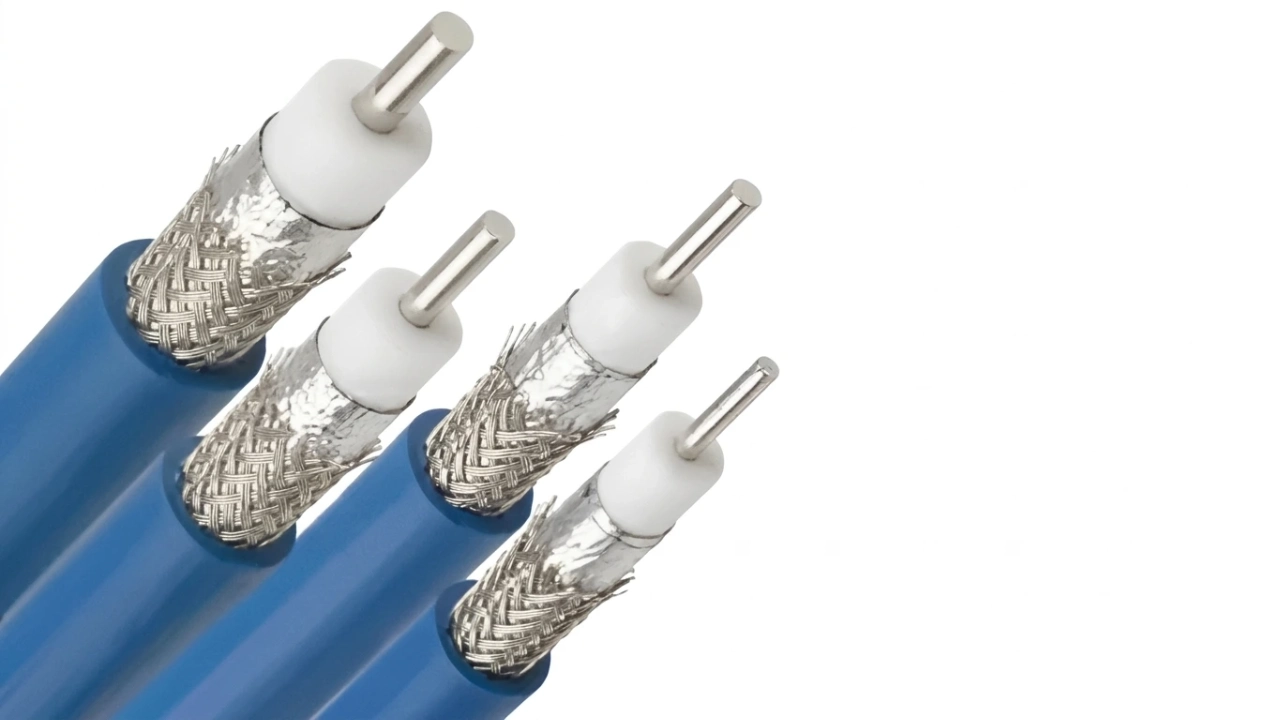
The LFX Series (Low Loss Flexible RF Cable) combines flexible construction with microporous PTFE dielectrics and silver-plated copper conductors. Its largest model, the LFX-750, limits loss to approximately 4.5 dB per 100 ft, while the thinner models have higher attenuation but provide greater routing flexibility and support frequencies up to 60 GHz.
Best Low Loss Cables for 75 Ohm Systems and Residential Applications
For 75 Ω connections, compare cables within this impedance group. Common examples include residential TV, cable internet, and satellite feeds, along with larger CATV distribution networks. Residential use alone does not establish impedance; follow the equipment specifications.
TV, CATV, and Satellite Systems: RG11 vs. RG6 vs. RG59
Among common residential TV cables, RG11 generally has the lowest signal loss, followed by RG6, while RG59 has higher attenuation and is less suitable for long high-frequency runs. RG11 achieves lower loss because it has a larger conductor and lower resistance, but its thicker construction makes installation more difficult.
For short residential connections, RG6 is often preferred because it is easier to route and terminate. RG11 becomes more useful when cable distances are longer and reducing signal loss is more important.
RG11 is not the lowest-loss option across all 75 Ω cables. For long, fixed CATV trunk or distribution runs, compare large-diameter 75 Ω hardline as well. Its installation and termination requirements generally make it more appropriate for network infrastructure than a short connection to a TV or modem.
Best Low Loss Cables for 50 Ohm and Specialized RF Systems
For equipment specified at 50 Ω, use a 50 ohm coaxial cable. The choices below cover permanent infrastructure runs, feedlines that need easier routing, and specialized microwave or measurement connections.
For cell boosters, check each cable path separately. Some models use a 75 Ω outdoor port and a 50 Ω indoor port, so the two connections may require different cables.
For high-power transmitting systems, coaxial cable power handling should also be evaluated alongside attenuation.
Flexible 50 Ω RF Low Loss Cables
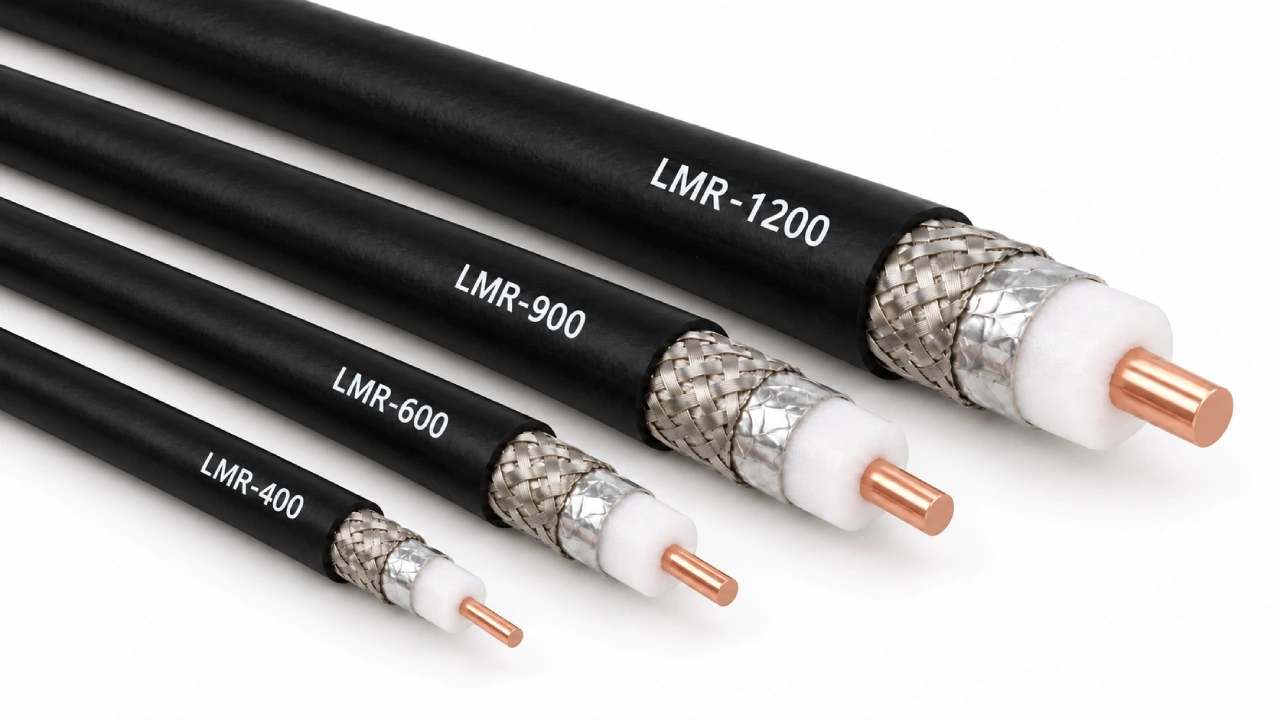
For flexible RF applications, increasing cable diameter is one of the most effective ways to reduce signal loss. LMR-600, LMR-900, and LMR-1200 provide lower signal loss than LMR-400 because they use larger conductors and have improved transmission characteristics.
LMR-400: A common low-loss coaxial cable for general RF installations. It provides a good balance between performance, cost, and flexibility but has higher attenuation than larger LMR cables.
LMR-600: A step up from LMR-400, offering significantly lower signal loss while remaining practical for many longer cable runs.
LMR-900: Provides even lower signal loss and is suitable when reducing cable loss is more important than easy routing.
LMR-1200: Provides the least amount of signal loss of these four standard LMR sizes but requires more space and is less convenient to install.
The best choice within this group depends on the installation. A larger cable can preserve more signal, but the improvement may not justify the additional cost or difficulty if the cable run is short.
Microwave and RF Test Equipment
In microwave and measurement applications, the lowest-loss cable is not always the largest cable available. These systems often require precision low-loss flexible coaxial cables or semi-rigid coaxial cables designed for specific frequency ranges, connector types, and electrical performance requirements.
Consider iPrece's LFX-750 50 Ω low-loss flexible cable for microwave interconnects where low signal loss and routing flexibility are priorities. LFX-750 coaxial cable can be used for RF and VNA measurements up to 20 GHz where cable movement makes phase and amplitude stability important. Confirm the insertion loss and connector configuration for the required assembly length.
Fixed RF Infrastructure: Corrugated Hardline Coax
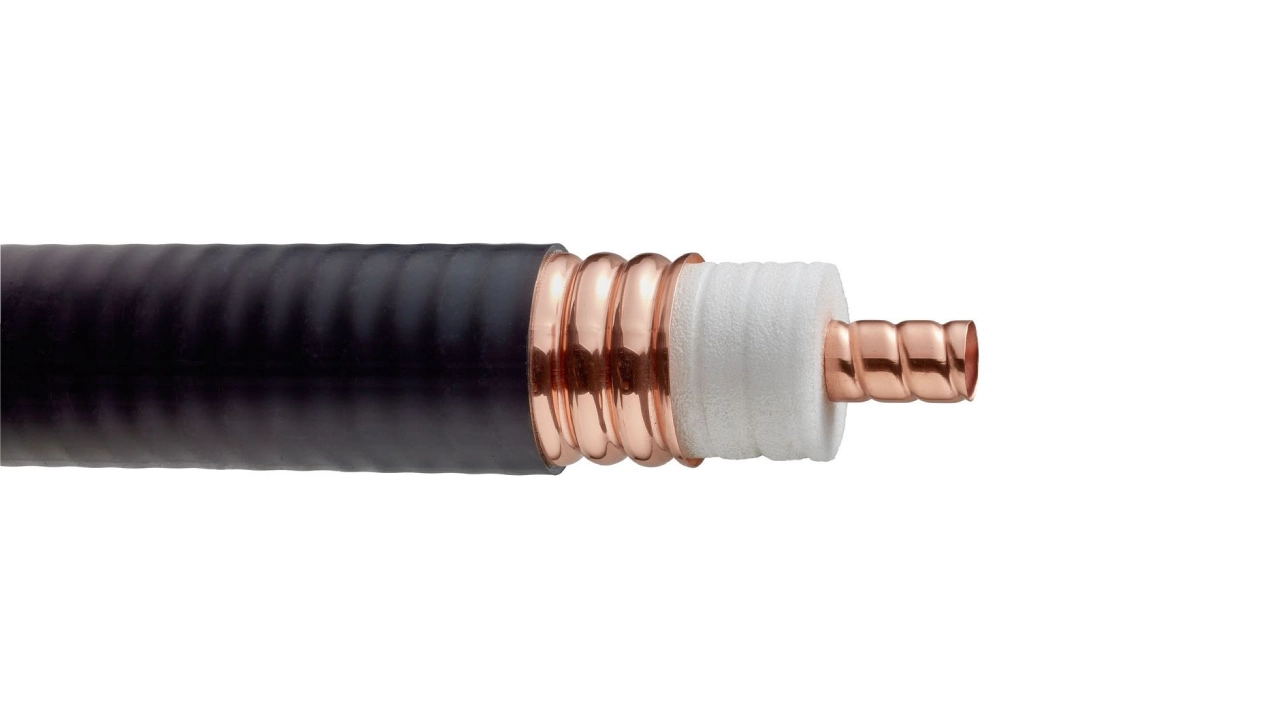
For a permanent 50 Ω transmission run where large diameter and limited flexibility are acceptable, large-diameter corrugated hardline coaxial cables are the leading option for minimizing signal loss. They are widely used in telecommunications infrastructure, broadcast systems, and large antenna installations. Compare the specific cable’s attenuation at your operating frequency: smaller hardline designs do not automatically outperform larger flexible cables.
However, hardline cable is not a universal solution. Its large diameter makes it difficult to bend, route, and install, and it often requires specialized connectors and installation equipment. For smaller systems or locations where cable flexibility matters, a lower-loss flexible coaxial cable may be a more practical choice.
What Makes One Coaxial Cable Lose Less Signal Than Another?
The amount of signal lost through a coaxial cable is determined by how efficiently the cable carries electromagnetic waves from one point to another. In RF engineering, this loss is known as attenuation and is measured in decibels (dB). Here are the most important factors that affect attenuation.
1. Thicker Cables with Larger Conductors
One of the biggest factors affecting coaxial cable loss is the size and design of the conductors inside the cable. Thicker coax generally has larger center and outer conductors, which reduce RF resistance and the signal energy lost as heat.
This is why larger cables such as LMR-1200, LMR-900, and hardline coax typically have lower signal loss than smaller cables like LMR-400. The tradeoff is that larger conductors increase cable diameter, weight, and installation difficulty.
2. Foam and Microporous Dielectrics
The dielectric is the insulation between the center conductor and outer conductor. Low-loss cables often use foamed polyethylene, microporous PTFE, or air-spaced insulation. Incorporating air reduces the energy absorbed by the dielectric compared with a similar construction using solid insulation.
Reducing dielectric loss becomes particularly important as frequency increases. The dielectric also affects coaxial cable velocity factor, but faster propagation alone does not establish lower signal loss.
3. Better Shielding Reduces Leakage and Interference
The outer conductor of a coaxial cable protects the signal from external electromagnetic interference while preventing signal leakage. Poor shielding can allow unwanted electromagnetic signals to enter the cable, creating noise that affects the quality of the received signal. Better shielding does not always mean dramatically lower attenuation, but it improves overall signal integrity by reducing interference from nearby electrical sources.
4. Shorter Runs and Lower Frequencies
Even a low-loss coaxial cable will experience greater signal attenuation as frequency and cable length increase. Higher-frequency signals, such as those used in many GHz applications, lose energy more quickly as they travel through the cable.For this reason, coaxial cables should always be compared at the same frequency and cable length. A cable that has excellent performance at 100 MHz may have significantly higher attenuation at 2.4 GHz or 5 GHz. Similarly, a small difference in loss per meter can become a major signal reduction over a long cable run.
5. Copper and Silver Surfaces Reduce Resistive Loss
Copper and silver carry RF current with less resistance than metals such as steel. At RF frequencies, current concentrates near the conductor surfaces, so conductive copper or silver layers can reduce the energy lost as heat. This is why some low-loss cables use copper conductors, copper cladding, or silver plating.
How to Reduce Signal Loss in a Coaxial Cable Assembly
The most effective way to reduce coaxial cable loss is not always choosing the largest cable available. A better approach is to reduce unnecessary attenuation while keeping the installation practical.
Choose a lower-loss cable when the run is long: Larger cables such as LMR-1200, LMR-900, or hardline coax can significantly reduce attenuation compared with smaller cables. However, the improvement should justify the additional cost and installation difficulty.
Keep cable runs as short as possible: Signal loss increases with cable length, so shortening the distance between the transmitter, receiver, and antenna is often one of the simplest ways to improve performance.
Use high-quality connectors and proper termination: Poorly installed connectors can add insertion loss and create impedance problems that reduce signal quality. When ordering custom RF cable assemblies, make sure the connectors are matched to the cable type, impedance, and operating frequency.
Avoid unnecessary adapters and connection points: Every additional connector, coupler, or splice can introduce small amounts of signal loss. Minimizing connection points helps preserve the signal throughout the assembly.
Use the correct coaxial cable for the frequency: Cable attenuation increases at higher frequencies, so a cable that performs well at lower frequencies may not be suitable for microwave or GHz applications. Always compare attenuation ratings at the actual operating frequency.
Maintain proper cable installation practices: Tight bends, crushed cable sections, and improper routing can affect the electrical characteristics of coaxial cable. Following the manufacturer's minimum bend radius recommendations helps maintain performance.
How to Calculate Coaxial Cable Signal Loss
To estimate the total cable loss, multiply the cable's attenuation rating by the actual cable length First, obtain the attenuation rating for the specific cable model at your operating frequency from the manufacturer’s datasheet. For a signal band, repeat the calculation at the relevant frequencies.
When the rating is stated for a reference length, such as 100 ft or 100 m, use:
Here, is the loss in dB over the reference length at frequency ; is the actual cable length, and is the estimated cable loss in dB. Use the same units for both lengths. If attenuation is already given per metre or per foot, simply multiply that rate by the length in matching units.
For example, if a coaxial cable has an attenuation of 3 dB per 100 feet and the installation requires 50 feet of cable, the estimated cable loss would be:
At 1 GHz, this means approximately 71% of the input power reaches the other end of the cable under matched conditions, before accounting for connector or adapter losses.
Keep in mind that this calculation only estimates the loss through the cable itself. The complete coaxial assembly may introduce additional losses from connectors, adapters, splices, and bends.
FAQ
Discussion (2)
Thanks! this was so usefull, idk about formula and math tho!
your welcome! feel free to ask any question for guidance.